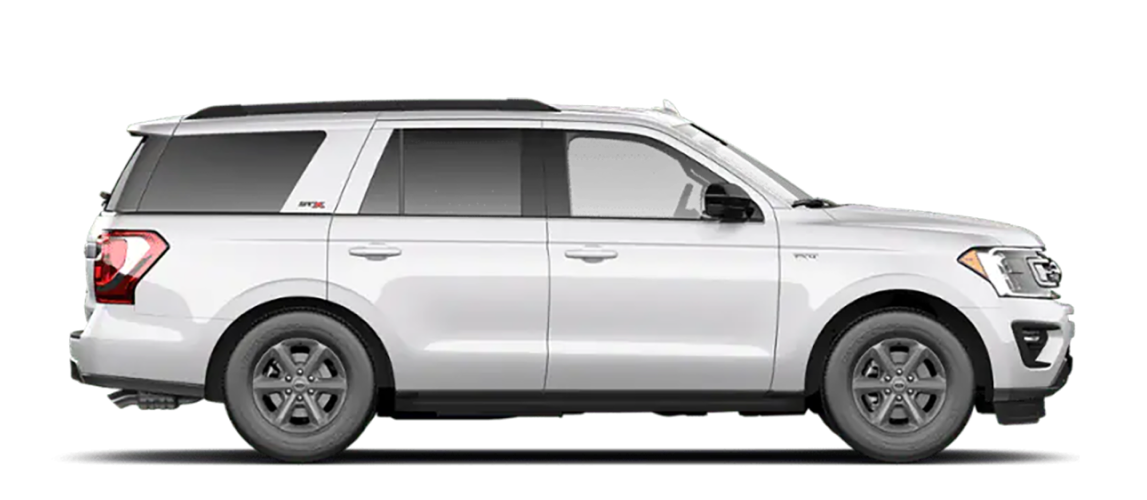
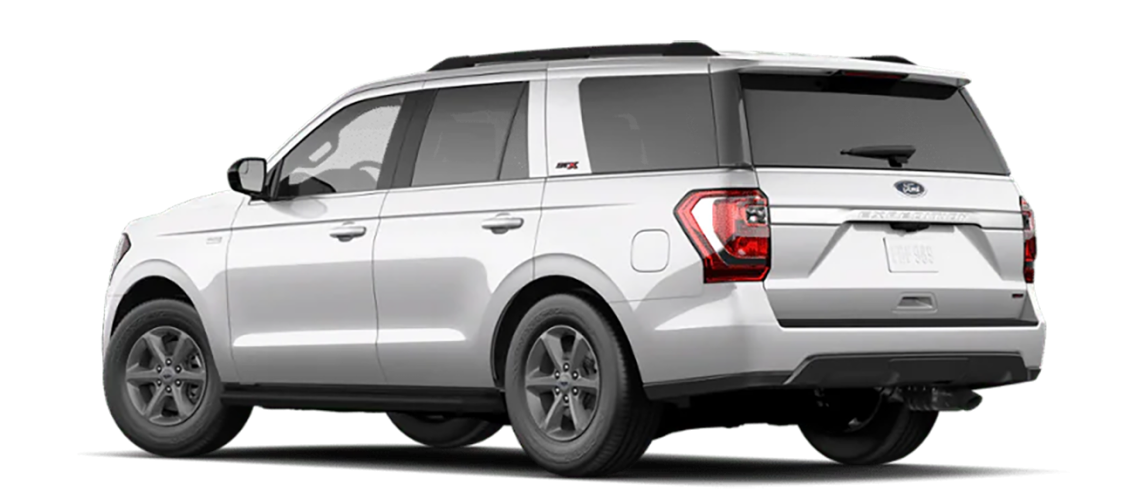
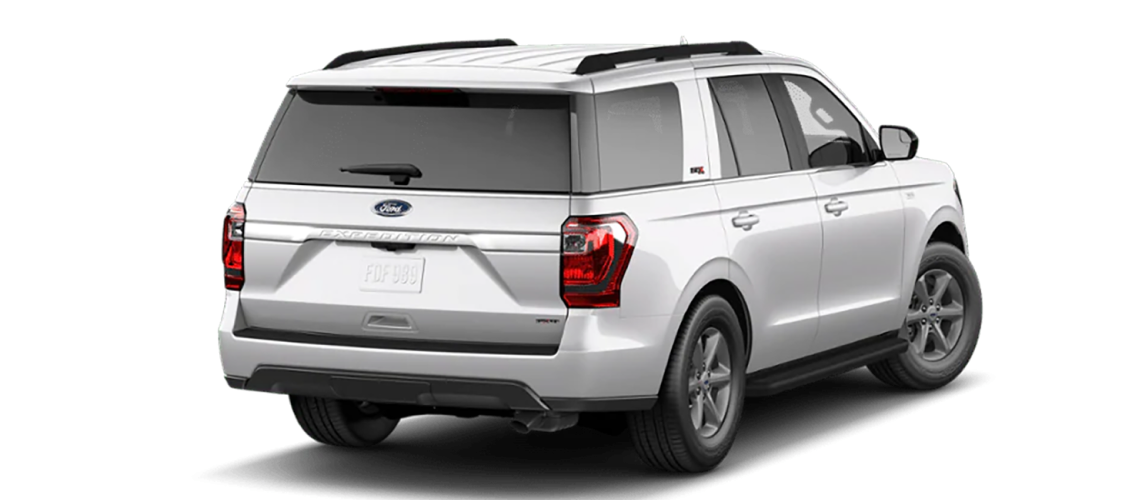
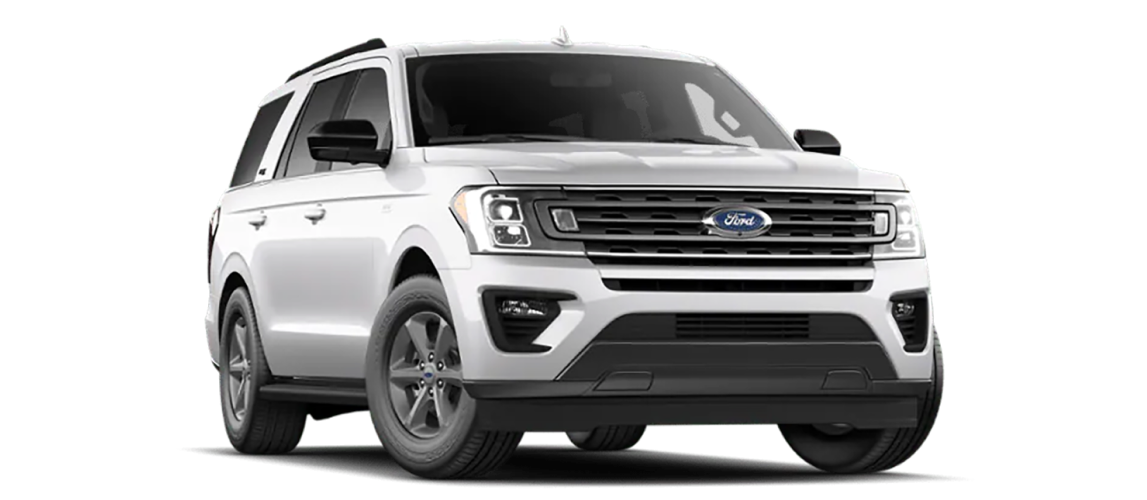
Specifications of Ford Expedition IV (U553) 3.5 EcoBoost V6 (375 HP) 4x4 Automatic
General characteristics of Ford Expedition IV (U553) 3.5 EcoBoost V6 (375 HP) 4x4 Automatic
The Expedition has an overall length of 210 inches. It's 83.6 inches in width with the mirrors folded in and 93.4 inches when they're folded out. The maximum height is 76.6 inches on 4x2 models and 76.4 inches on 4x4 models. Most impressive of all is the 122.5-inch wheelbase, which is significantly longer than the 116-inch wheelbase of the Chevrolet Tahoe. Ground clearance is claimed to be 9.8 inches.
Ford supplies figures for approach/breakover/departure angles, even though the Expedition isn't marketed as a serious off-roader. The provided figures are 23.4/21.5/22.2 degrees for 4x2 models, and 23.3/21.4/21.9 for 4x4. Far from spectacular, but to be expected considering the Expedition's sizable overhangs. Curb weights start at 5,368 lbs and top out at 5,623 lbs in the heaviest configuration.
Buyers can choose between six no-cost exterior colors on the base XL STX trim, consisting of Magnetic, Agate Black, Iconic Silver, Antimatter Blue, Kodiak Brown, and Oxford White. From XLT upward, the palette is expanded somewhat, adding Rapid Red and Burgundy Velvet at a cost of $395, while Star White adds $595 to the price of the 2021 Expedition. Oxford White and Iconic Silver are not available on the top Platinum trim, however.
Sporting a fully independent suspension at every wheel, the Expedition offers a comfy, refined ride. It's exactly what you'd expect from a vehicle in this segment, though there is one fly in the ointment. The steering is vague and doesn't inspire confidence in high-speed corners. Considering the size and weight, this SUV was always going to roll through the bends. Situations, where this would be noticeable are few and far between, so we'd focus on the Expedition's daily and long-haul abilities, instead.
Driving in the city is relatively easy enough, though you have to keep the car's dimensions in mind. The average parking space isn't large enough to accommodate a car like the Expedition. On the open road, it's sublime. There isn't much that can unsettle it. Minor bumps and imperfections are dealt with quickly and efficiently - you could probably drive right over an EcoSport and not even know it.
The Platinum model comes with additional power, but we're not entirely sure why. The extra 25 hp and ten lb-ft of torque have a negligible impact on a vehicle this size, so the only thing we can think of is bragging rights.
The Expedition's fuel consumption figures make for interesting reading. According to the EPA, the rear-wheel-drive model can manage gas mileage estimates of 17/23/19 mpg city/highway/combined. Adding the 4WD system has a minimal impact on the consumption, as it will do 17/22/19 mpg.
Compared to the Chevrolet Tahoe's EPA-estimated 4WD figure of 15/19/16 mpg, the Expedition is miles ahead. The Chevy is also equipped with a ten-speed gearbox, which helps it out in the frugality department. And even when up against a more old-school rival, the Expedition's figures are even more impressive: a Toyota Sequoia with a 5.7-liter V8 and a six-speed automatic transmission can only manage 13/17/14 mpg.
If you're still carrying the flag for naturally-aspirated engines, consider this: a 4WD Toyota Sequoia with a 26.4-gallon tank will only do 370 miles on a full tank. A 4WD Expedition with a smaller 25-gallon tank will do 475 miles.
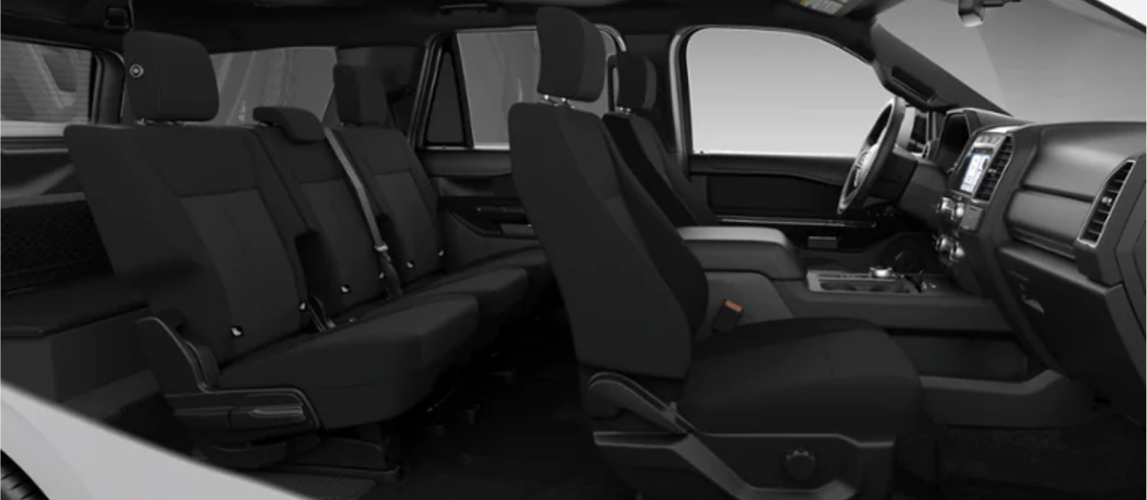
As standard, the Expedition is an eight-seater. Second-row captain's chairs can be added at an additional cost on most of the range, taking the seating count down to seven. Space is not a problem, either way. Front passengers get 43.9 inches of legroom and 42 inches of headroom. Passengers in the second row have 41.5 inches of legroom and 40 inches of headroom - a respectable list of numbers, but nothing truly extraordinary.
Ford's unique selling point is that its third-row can accommodate a full-size human. For comparison's sake, the Chevy Tahoe's third-row legroom is 24.8 inches. The Expedition offers its third-row occupants a class-leading 36.1 inches of legroom and 37.3 inches of headroom. If you can convince the second-row passengers to slide forward a bit, the third-row legroom can be 40.9 inches, at best.
With all eight seats in place, the Expedition still offers a reasonable 20.9 cubic feet behind the third row. It easily beats Chevy's 15.3 cubes and the 18.9 cubes provided in the Toyota. Fold the third-row flat, and you get 63.6 cubes of cargo capacity. As the XL STX is strictly a five-seater, the latter figure is its standard cargo capacity. With both the second and third-row folded flat, the cargo capacity grows to 104.6 cubic feet.
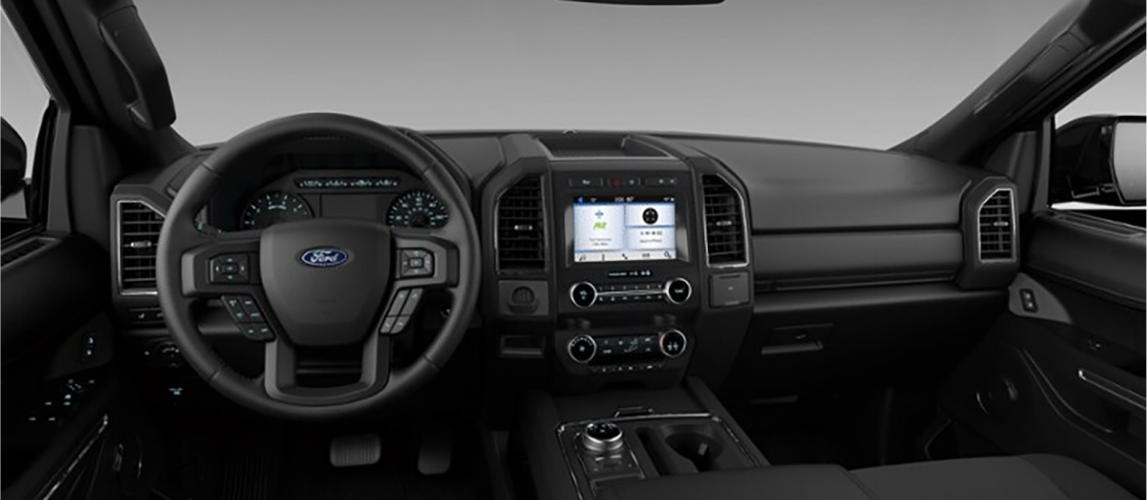
Interior storage is equally impressive. The center armrest between the front passengers is massive, and the door pockets are vast. The cupholder count is 15; nearly every passenger can bring two drinks along.